
Roofing Built for Ice, Snow, and Decades
Standing Seam Roofing in Washburn for properties facing heavy winter snow loads and freeze-thaw cycles
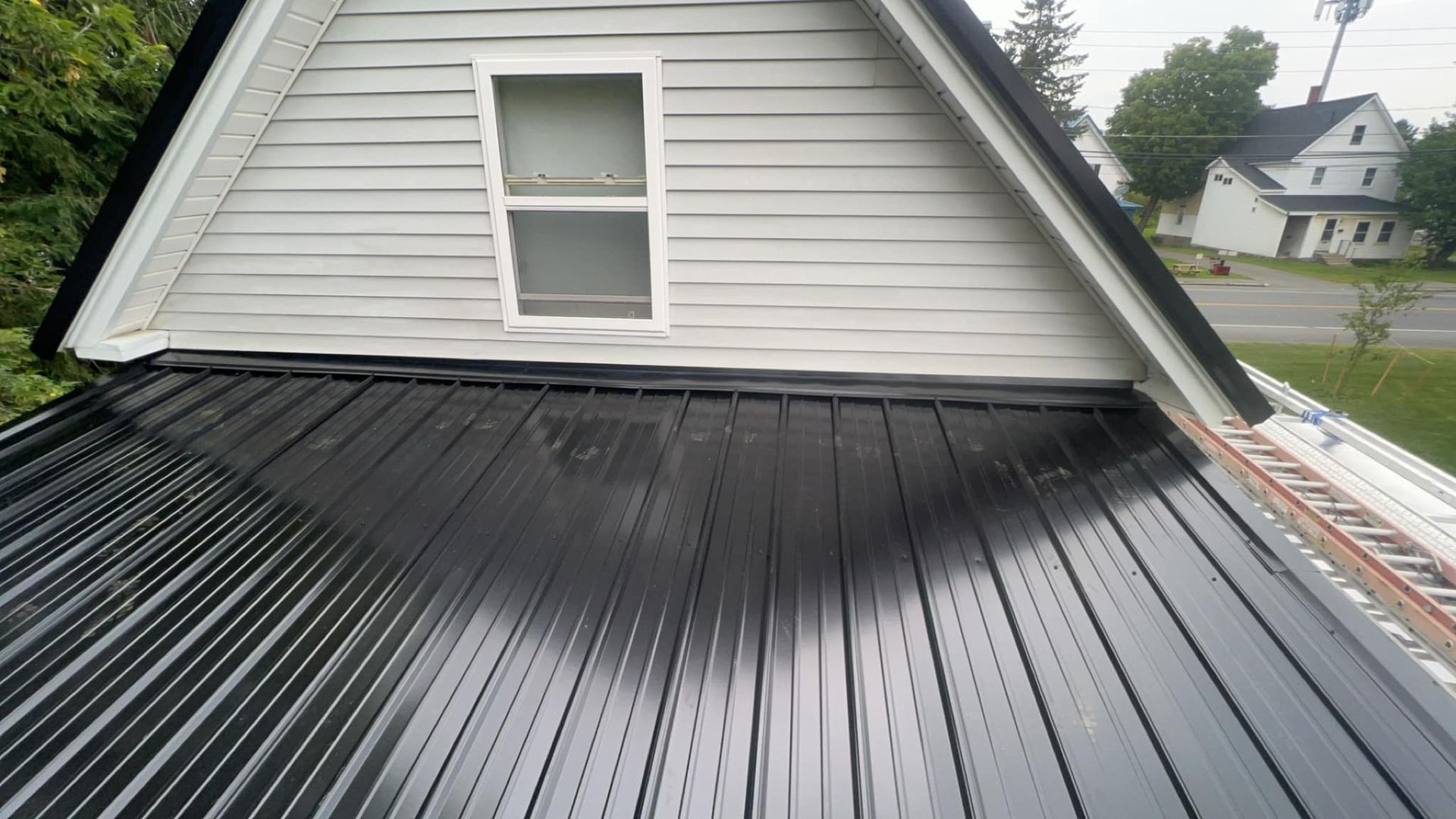
Advanced Construction and Roofing installs standing seam roofing systems across Aroostook County, where winters deliver relentless snow accumulation and ice formation that challenges conventional roofing materials. This metal roofing approach uses concealed fasteners rather than exposed screws, which eliminates the most common leak points found in other metal roof designs. Properties throughout Washburn and surrounding areas face winter conditions that can hold several feet of snow on roofs for months, making fastener integrity and panel movement accommodation critical to long-term performance.
The concealed fastener design allows metal panels to expand and contract with temperature swings without stressing attachment points, while vertical seams shed snow and ice more effectively than overlapping panel systems. This roofing method performs particularly well under the heavy snow loads and rapid melt-freeze cycles common in northern Maine, where conventional roofing materials often fail at fastener locations or seam joints after repeated thermal movement.
Schedule a property evaluation to review roof pitch, existing structural capacity, and standing seam system options for your building.
What Proper Standing Seam Installation Requires
Installation begins with substrate preparation and underlayment selection based on roof pitch and exposure conditions, followed by precise panel measurement to ensure thermal movement space at all termination points. Each panel locks into the adjacent panel through a mechanical seam that gets crimped on-site, creating a continuous weather barrier without penetrating the roofing surface with fasteners. Clips attached to the roof deck hold panels in place while allowing the metal to move independently as temperatures change, which prevents the fastener backing-out and oil-canning problems seen in through-fastened metal roofs.
Once installation is complete, you'll notice a clean roofline without visible fasteners or seam overlaps, and snow slides off more predictably rather than building up in uneven drifts. The concealed fastener system means no screw holes are exposed to weather, and the standing seams create defined channels that direct meltwater straight down the roof slope rather than allowing it to migrate sideways under shingles or panels. Advanced Construction and Roofing maintains organized worksites throughout the project, with metal scrap and packaging removed daily to prevent jobsite hazards.
The system's longevity comes from eliminating the fastener degradation cycle common in exposed-fastener metal roofing, where rubber washers compress over time and screws loosen through thermal cycling. Standing seam roofs typically require minimal maintenance beyond occasional inspection of trim flashings and valley components, with panel systems themselves remaining intact for decades when properly installed over appropriate substrates.
Questions Property Owners Ask Before Installation
Standing seam roofing generates specific questions about installation requirements, material performance, and long-term maintenance expectations in northern climates.
What roof pitch is required for standing seam installation?
Most standing seam systems perform best on roof slopes of 3:12 or steeper, though some low-slope panels can be installed on pitches as low as 1:12 with additional underlayment and seam sealing. Steeper pitches allow better snow shedding and reduce the chance of meltwater backing up under panels during freeze-thaw cycles common throughout Aroostook County.
How does the concealed fastener design improve durability?
Fasteners attach to the roof deck through clips that hold the panel edge, not through the visible metal surface, which means no screw holes penetrate the weather barrier. This design eliminates the most common metal roof failure point—deteriorated fastener washers that allow water infiltration at screw locations after years of thermal expansion and UV exposure.
Why does standing seam roofing cost more than other metal roof options?
The system requires specialized panel-forming equipment, mechanical seaming tools, and more labor-intensive installation compared to through-fastened metal panels. You're paying for a roof system with fewer long-term maintenance requirements and better thermal movement accommodation, which matters significantly in climates with temperature swings exceeding 100 degrees between summer and winter.
When should I schedule installation to avoid weather delays?
Late spring through early fall provides the most consistent installation conditions in Washburn, with temperatures warm enough for proper sealant curing and underlayment adhesion. Winter installations are possible but require additional planning for substrate warming and worker safety on icy roof surfaces.
What maintenance does a standing seam roof require after installation?
Periodic inspection of trim flashings, valley components, and penetration boots is recommended, but the panels themselves require no maintenance beyond removing debris from valleys. The concealed fastener design means you won't need to replace deteriorated screw washers or re-fasten loose panels like you would with exposed-fastener metal roofing systems.
Advanced Construction and Roofing coordinates standing seam roofing projects with attention to panel layout, thermal movement accommodation, and trim detailing that performs through decades of Maine weather cycles. Request a standing seam roofing estimate that includes material options, project timeline, and installation approach for your specific roof configuration.