Exterior Protection That Outlasts Northern Weather
Siding Installation in Washburn for homes and commercial buildings requiring durable weather barriers against moisture and temperature extremes
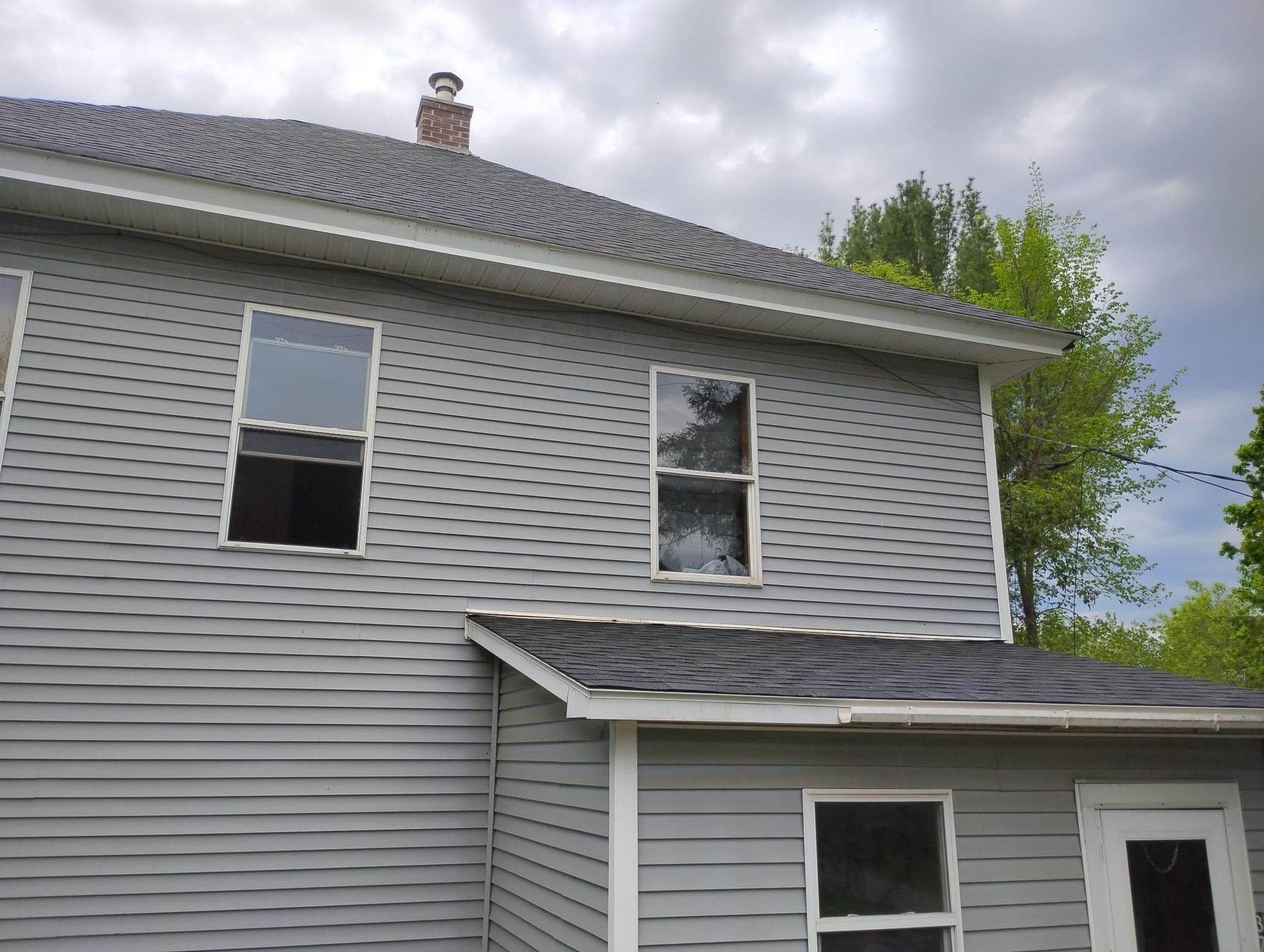
Siding systems in Aroostook County face constant moisture challenges from snow melt, freezing rain, and humidity swings that cause many exterior materials to warp, crack, or rot within years of installation. Advanced Construction and Roofing installs LP SmartSide, vinyl siding, cedar impression, cedar shake, and board and batten siding systems designed to withstand these conditions while improving curb appeal and thermal performance. Proper installation in Washburn involves more than attaching panels to wall framing—it requires understanding how moisture moves through wall assemblies during heating season and how thermal expansion affects different siding materials across seasonal temperature ranges.
Installation begins with evaluating existing wall conditions, moisture barrier requirements, and material selection based on building exposure and maintenance preferences, then proceeds through systematic panel attachment that accommodates thermal movement while maintaining weather-tight seams. Different siding materials expand and contract at different rates, which affects fastener placement, overlap dimensions, and trim detailing—decisions that directly impact long-term performance in climates where winter temperatures regularly drop below zero.
Arrange an on-site consultation to evaluate your current exterior condition and discuss siding material options suited to your building's exposure and style.
How Siding Systems Address Moisture and Temperature Cycling
The installation process involves removing existing siding when necessary, inspecting and repairing sheathing damage, installing appropriate moisture barriers based on wall assembly type, and attaching siding panels with fastener spacing and placement that allows thermal movement without buckling or pulling loose. LP SmartSide engineered wood siding requires different installation techniques than vinyl systems—wood-based products need more rigid fastening to prevent warping, while vinyl panels must be loosely fastened to allow expansion and contraction that can exceed a quarter-inch across a single twelve-foot panel during temperature swings.
After installation completes, you'll notice improved weather protection around windows and doors where trim work seals gaps that previously allowed air infiltration, and wall surfaces will shed water more effectively rather than absorbing moisture into substrate materials. Properly installed siding creates a drainage plane behind the visible panels, allowing any moisture that penetrates the outer layer to drain downward and exit at the foundation line rather than saturating wall cavities. Clean worksites are maintained throughout the project, with material scrap and packaging removed daily to prevent debris accumulation around your property.
Material selection affects not only appearance but also maintenance requirements and longevity—vinyl siding requires no painting but can become brittle in extreme cold, while LP SmartSide offers better impact resistance and a wood-grain texture but needs factory-applied finish protection maintained over time. Both materials outperform traditional wood siding in moisture resistance when installed with proper flashing and drainage details at all horizontal transitions and penetrations.
Common Siding Installation Questions
Property owners considering siding replacement often ask about material performance, installation timing, and long-term maintenance requirements in northern climates.
What causes siding to fail prematurely in cold climates?
Most siding failures result from improper fastening that doesn't accommodate thermal movement, missing or inadequate moisture barriers that allow water infiltration behind panels, and trim details that trap water rather than directing it away from wall assemblies. Vinyl siding fastened too tightly will buckle in summer heat, while wood-based products installed without drainage gaps will absorb moisture and rot at panel edges.
How does LP SmartSide compare to traditional wood siding?
LP SmartSide uses engineered wood strands treated with zinc borate and sealed with a resin overlay, which provides better moisture resistance and dimensional stability than solid wood siding that can split, warp, and rot when exposed to freeze-thaw cycles. The material holds paint and stain better than vinyl while offering impact resistance that prevents the cracking problems common in rigid vinyl panels during Washburn winters.
When is the best time to schedule siding installation?
Spring through fall provides optimal installation conditions with temperatures warm enough for proper sealant curing and worker efficiency, though projects can continue into early winter if weather permits. Siding installation requires dry sheathing and above-freezing temperatures for adhesive-backed moisture barriers and caulking materials to bond properly.
Why does siding installation cost vary between materials?
Material costs differ significantly—vinyl siding is generally the most economical option, while LP SmartSide and cedar-style products cost more due to material composition and manufacturing processes. Installation labor also varies, with board and batten and shake-style siding requiring more cutting, fitting, and trim work than straightforward horizontal lap siding panels.
What happens to existing siding during replacement?
Existing siding is removed down to wall sheathing, which is then inspected for rot, water damage, and structural integrity before new moisture barriers and siding are installed. This removal process often reveals hidden damage around windows, doors, and foundation transitions that needs repair before new siding installation can proceed properly.
Advanced Construction and Roofing manages siding projects with focus on substrate preparation, moisture barrier integration, and material-appropriate installation techniques that extend siding system life. Request a siding consultation to review material options, project scope, and installation approach for your residential or commercial building.